IRS 501 C (3) Non Profit Organization

Beverage Container Fee to Decrease by Half Cent

Posted on

State seal 
DEPARTMENT OF HEALTH
DAVID Y. IGE
GOVERNOR
VIRGINIA PRESSLER, M.D
DIRECTOR
                              
 
FOR IMMEDIATE RELEASE
July 27, 2015                                                                        15-030
                                          
BEVERAGE CONTAINER FEE TO DECREASE BY HALF CENT
Lower annual redemption rate triggers a decrease of container fee
HONOLULU – The Hawaii State Department of Health (DOH) is notifying manufacturers, distributors, and importers of HI-5 beverage containers who are registered with the state of a decrease in the recycling program’s 1.5-cent container fee. Effective Sept. 1, 2015, the fee will decrease to one-cent per container in response to the state’s redemption rate, which decreased from 72.6 percent in fiscal year 2014 to 68.4 percent in the last fiscal year, which ended in June 2015.
“Since its inception, the HI-5 program has recycled more than 6.67 billion containers,” said
Keith Kawaoka, DOH deputy director of Environmental Health. “Despite the lower redemption rate during fiscal year 2015, Hawaii residents still managed to recycle an estimate of more than 640 million containers, helping to significantly reduce litter and conserve resources.”
The deposit beverage container law requires the DOH to annually review the container redemption rate for the 12-month period that extends from July 1 through June 30. If the redemption rate is below 70 percent for the period, the department is required by law to set the container fee to one-cent per container effective Sept. 1. The mechanism for annually adjusting the container fee was included in the law from its inception to assure appropriate funding for the operation of the program.
“This fee is often passed on to retailers, which in turn passes it on to consumers. It is added to the five-cent deposit charged for each container at the register, so the public may see reduced fees at some retailers when purchasing beverages in HI-5 containers,” added Kawaoka.
The “container fee” provides the revenue that funds the Deposit Beverage Container (DBC) program. Container fee revenues are used to pay handling fees to certified redemption centers around the state and to support a variety of administrative activities required to implement the DBC program.
For more information on the state’s Deposit Beverage Container Program, visit http://health.hawaii.gov/hi5/

Secondhand Smoke Tied to Raised Stroke Risk in Study

Posted on Updated on

Link to http://www.medlcineplus.gov for more information

Secondhand Smoke Tied to Raised Stroke Risk in Study

Odds of brain attack boosted by 30 percent, researchers say

By Robert Preidt

Wednesday, July 15, 2015

HealthDay news imageWEDNESDAY, July 15, 2015 (HealthDay News) — New research suggests that exposure to secondhand smoke may increase nonsmokers’ risk of stroke by nearly one-third.

“Our findings suggest the possibility for adverse health outcomes such as stroke among nonsmokers exposed to secondhand smoke and add to the body of evidence supporting stricter smoking regulations,” said lead author Angela Malek, of the Medical University of South Carolina in Charleston.

Researchers analyzed data from nearly 22,000 white and black American adults older than 45. About 23 percent said they were exposed to secondhand smoke in the previous year.

Between April 2003 and March 2012, there were 428 strokes among the study participants. There were 352 ischemic strokes (blockage of blood flow to the brain), 50 bleeding (hemorrhagic) strokes, and 26 strokes of unknown subtype.

After adjusting for other stroke risk factors — such as diabetes, high blood pressure and heart disease — the researchers found that exposure to secondhand smoke was linked to about a 30 percent increase in nonsmokers’ risk of stroke.

However, the association seen in the study does not prove a cause-and-effect relationship.

The study was published recently in the American Journal of Preventive Medicine.

“Future research will need to investigate the role of cardiovascular disease risk factors in the association and explore potential exposure to additional environmental variables, such as ambient air pollutants, in relation to stroke,” Malek said in a journal news release.

Each year, nearly 800,000 Americans suffer a stroke. Strokes cause one of every 19 deaths in the United States and are a leading cause of disability.

SOURCE: American Journal of Preventive Medicine, news release, July 8, 2015

HealthDay
More Health News on:
Secondhand Smoke
Stroke

Recent Health News

Supreme Court Upholds Affordable Care Act

Posted on

webmd logo News Alert
E F T
Thursday, June 25, 2015
Supreme Court Upholds Affordable Care Act
Millions of people who receive tax credits to pay for health insurance will get to keep them. We explain the decision and how it affects the millions who have coverage under Obamacare.
Read Article ›
  • WebMD Live Coverage: Reactions Across the Web
  • 19 Million Could Have Lost Coverage
  • 4 Words the Supreme Court Considered
More on Health Insurance
Tax Credits and Subsidies Explained
Uninsured Rate Lowest Ever?
Medicaid and the Affordable Care Act
Need-to-Know Health Insurance Basics
ADVERTISEMENT
ADVERTISEMENT
Symptom Checker
You are receiving this message because you registered with WebMD as krhcai@yahoo.com.
If you did not for WebMD please contact our Customer Care Team.
Mobile Apps  |  Contact Us  |  WebMD Privacy Policy  |   Unsubscribe
Follow Us: f t p
© 2015 WebMD, LLC. All rights reserved.
WebMD Office of Privacy | 1201 Peachtree Street, NE | Atlanta, GA 30361

HEP Free Hawaii Launches Local Campaign to increase Hepatitis Awareness for Micronesians

Posted on

May 20, 2015

FOR IMMEDIATE RELEASE
Thaddeus Pham
Co-Director
(808) 551-1917
                              
HEP FREE HAWAII LAUNCHES LOCAL CAMPAIGN
TO INCREASE HEPATITIS AWARENESS FOR MICRONESIANS
 
HONOLULU, May 20, 2015 – In commemoration of Hepatitis Awareness Month and Asian Pacific Heritage Month, Hep Free Hawai‘i (HFH) recently re-launched the Micronesian Education Liver Wellness Program (MELWP) to raise awareness about hepatitis B among Micronesian communities living in Hawai‘i.
Hepatitis in Hawai‘i
Hawai‘i has the highest rate of liver cancer in the U.S., and leading cause of liver cancer in Hawai’i is hepatitis B.  According to HDOH, about 40,000 people in Hawai‘i may be living with hepatitis B, and most are unaware of their infection.  The people most at risk for hepatitis B are those born in Asia and the Pacific, including Republic of Marshall Islands and Federated States of Micronesia. Unfortunately, most of these people do not get tested or do not get medical care to manage hepatitis B.
Micronesian Education Liver Wellness Program (MELWP)
To address this important health issue for Micronesians, HFH partnered with local community leaders to relaunch MELWP to increase awareness and action around hepatitis B. The program will provide free educational “talk story” sessions for Micronesian community members on Oahu to increase conversation and reduce stigma around this deadly disease.
“We don’t have to let hepatitis take our communities. We can take action,” states Kenson Alik, MELWP Director and a hepatitis B survivor. “We hope that MELWP will empower local Micronesian communities to fight back against hepatitis. As someone who has been through it, I know that this is important for the health of our community!”
According to Alik, community members can take action against hepatitis B by:
  1. Getting educated about hepatitis B
  2. Getting tested for hepatitis B
  3. Getting vaccinated for hepatitis B
  4. Getting treated for hepatitis B
Giving a Voice to Micronesia
In May 2015, Alik was one of five people from Hawaii selected for a Caring Ambassadors scholarship to advocate for hepatitis B prevention in Washington D.C. With the support of Hep Free Hawaii, he met with Hawaii legislators to share the importance of increased hepatitis B services for all Asians and Pacific Islanders, especially communities born in Micronesia.
“I have experienced many difficulties due to hepatitis B,” stated Alik.  “I want to ensure that no one else from my Micronesian community has to deal with liver cancer or liver transplant.  Together, we can talk about this disease, and we can prevent it!”
For more information on how to participate in MELWP on Oahu, contact Kenson Alik at (808) 783-9756 or kenalik04@yahoo.com.
About Hep Free Hawai‘i
Hep Free Hawai‘i is a grassroots coalition of more than eighty organizations whose overall goal is to increase awareness of and access to hepatitis services in Hawai‘i.  For more information about the “Take That!” campaign, go to www.hepfreehawaii.org or follow @hepfreehawaii on Facebook, Twitter, or Instagram.
###

Bills Would Uphold America’s Commitment to Pacific Jurisdictions by Restoring Medicaid

Posted on

    APIAHF Supports Legislation to Restore Medicaid Eligibility to COFA Migrants

May 12, 2015

WASHINGTON — Today, the Asian & Pacific Islander American Health Forum (APIAHF) released the following statement in support of legislation introduced by Senator Mazie Hirono (HI) and Congresswoman Tulsi Gabbard (HI) to restore Medicaid eligibility for Compacts of Free Association (COFA) migrants. More than 56,000 COFA migrants from the Federated States of Micronesia, Marshall Islands and Republic of Palau work and reside in the U.S., but are unjustly barred from federal health care programs.

“Congressional action is needed because, quite simply, the federal government has not kept its treaty agreements,” said Kathy Ko Chin, APIAHF president and CEO. “COFA nations have contributed greatly to our nation’s security, and in return, it is our responsibility to provide for their health and well-being. It is time that the federal government lives up to its promise and allows COFA migrants to access the same affordable health programs their tax dollars support.”

Prior to the 1996 Personal Responsibility and Work Opportunity Reconciliation Act, COFA migrants were eligible for federal health programs, including Medicaid. That changed in 1996 when they were rendered not eligible for federal means-tested health programs, including Medicaid. As a result, states with sizable COFA migrant populations have experienced first-hand challenges providing care for these populations, many of whom have serious chronic conditions and health disparities, including effects from nuclear test bombing in some jurisdictions. Hawaii, California, Washington, Oregon, Utah, Arizona, Arkansas, Missouri, Florida and Oklahoma have COFA migrant populations exceeding 1,000 and have borne the cost of providing care for these populations, in the absence of federal support.

The Pacific jurisdictions strengthen our national security by securing exclusive access to important Pacific waters since World War II. Reinstating Medicaid eligibility would fulfill the federal government’s responsibilities under the Compacts and give states the resources to care for these Pacific Islander populations.

Sen. Hirono’s and Rep. Gabbard’s companion bills build on long-standing support in Congress to correct the 1996 error and restore Medicaid coverage to COFA migrants.

###

J Marques

May 12 (2 days ago)

to me
Hi Bj,
could you please review, format if needed and post.
Mahalo,
auntie Jessie


   “Nothing will work unless you do”, – Maya Angelou

Confidentiality Notice:  This e-mail message, including an attachments, is for the sole use of the intended recipient (s) and may contain confidential and privileged information.  any unauthorized review, use, disclosure or distribution is prohibited.  If you are not the intended recipient, please contact the sender by reply email and destroy all copies of the original message.
—– Forwarded Message —–
From: APIAHF <info@apiahf.org>
To: krhcai@yahoo.com
Sent: Tuesday, May 12, 2015 11:00 AM
Subject: Bills Would Uphold America’s Commitment to Pacific Jurisdictions by Restoring Medicaid

Bills Would Uphold America’s Commitment to Pacific Jurisdictions by Restoring Medicaid

APIAHF Supports Legislation to Restore Medicaid Eligibility to COFA Migrants

May 12, 2015

WASHINGTON — Today, the Asian & Pacific Islander American Health Forum (APIAHF) released the following statement in support of legislation introduced by Senator Mazie Hirono (HI) and Congresswoman Tulsi Gabbard (HI) to restore Medicaid eligibility for Compacts of Free Association (COFA) migrants. More than 56,000 COFA migrants from the Federated States of Micronesia, Marshall Islands and Republic of Palau work and reside in the U.S., but are unjustly barred from federal health care programs.

“Congressional action is needed because, quite simply, the federal government has not kept its treaty agreements,” said Kathy Ko Chin, APIAHF president and CEO. “COFA nations have contributed greatly to our nation’s security, and in return, it is our responsibility to provide for their health and well-being. It is time that the federal government lives up to its promise and allows COFA migrants to access the same affordable health programs their tax dollars support.”

Prior to the 1996 Personal Responsibility and Work Opportunity Reconciliation Act, COFA migrants were eligible for federal health programs, including Medicaid. That changed in 1996 when they were rendered not eligible for federal means-tested health programs, including Medicaid. As a result, states with sizable COFA migrant populations have experienced first-hand challenges providing care for these populations, many of whom have serious chronic conditions and health disparities, including effects from nuclear test bombing in some jurisdictions. Hawaii, California, Washington, Oregon, Utah, Arizona, Arkansas, Missouri, Florida and Oklahoma have COFA migrant populations exceeding 1,000 and have borne the cost of providing care for these populations, in the absence of federal support.

The Pacific jurisdictions strengthen our national security by securing exclusive access to important Pacific waters since World War II. Reinstating Medicaid eligibility would fulfill the federal government’s responsibilities under the Compacts and give states the resources to care for these Pacific Islander populations.

Sen. Hirono’s and Rep. Gabbard’s companion bills build on long-standing support in Congress to correct the 1996 error and restore Medicaid coverage to COFA migrants.

###
Connect with Us
Facebook Twitter LinkedIn YouTube Donate
Asian & Pacific Islander American Health Forum
Headquarters
One Kaiser Plaza, Suite 850
Oakland, CA 94612
Tel: 415.954.9988
Fax: 510.419.0263
Policy Office
1629 K Street NW, Suite 400
Washington, DC 20006
Tel: 202.466.7772
Fax: 202.466.7772
www.apiahf.org
empowered by Salsa

Click here to Reply or Forward
5.4 GB (36%) of 15 GB used
Last account activity: 17 minutes ago

Details

KRHCAI sends three to attend HCF Leadership Conference on O’ahu

Posted on

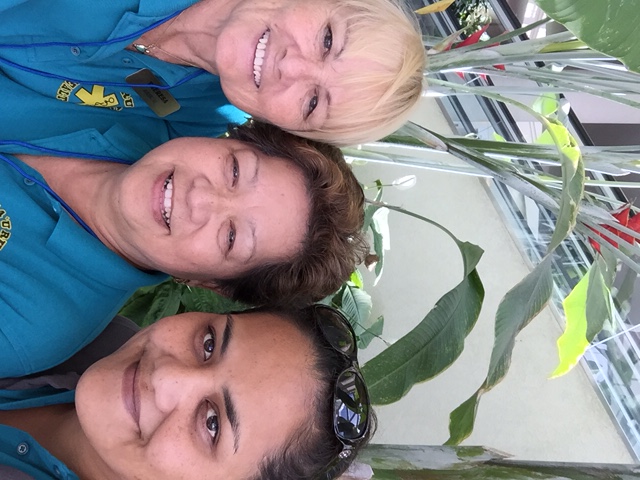
Theresa, Jessie and Heanu 2015Theresa Richardson,Office Manager, Jessie Marques , Executive Director/Program Coordinator and Heanu Grace, KRHCAI Board of Director and secretary attended the Hawaii Community Foundation leadership conference on Oahu at Hawaii Convention Center.