IRS 501 C (3) Non Profit Organization
NRHA announces H.R. 3991 – Critical Access Hospital Relief Act introduced
The National Rural Health Association has exciting news to announce – Congressman Adrian Smith (R-NE), introduced H.R. 3991, the Critical Access Hospital Relief Act which would repeal the burdensome 96-Hour rule now being enforced by the Centers for Medicare and Medicaid Services. This regulation requires physicians at Critical Access Hospitals at the time of admission to certify Medicare and Medicaid patients will not be there more than 96 hours. Otherwise, the hospital must transfer the patient or face non-reimbursement. Your advocacy efforts are paying off! Thank you!!
Congressman Smith joins Representatives Greg Walden (R-OR), Lynn Jenkins (R-KS) and David Loebsak (D-IA) in sponsoring this bill.
New CDC Vital Signs: Child Passenger Safety
New CDC Vital Signs: Child Passenger Safety
One in three children who died in crashes in 2011 was not buckled up, according to a new CDC Vital Signs report. CDC analyzed 2002–2011 data from the Fatality Analysis Reporting System, collected by the National Highway Traffic Safety Administration, to determine the number and rate of motor-vehicle occupant deaths, and the percentage of child deaths among children age 12 and younger who were not buckled up. Motor vehicle crash deaths among children age 12 and younger decreased by 43 percent in the past decade (2002-2011), however, more than 9,000 children died in crashes during that period.
Research has shown that using age- and size-appropriate child restraints (car seats, booster seats, and seat belts) is the best way to save lives and reduce injuries in a crash, yet only 2 out of every 100 children live in states that require car seat or booster seat use for children age 8 and under. Almost half of all black (45 percent) and Hispanic (46 percent) children who died in crashes were not buckled up, compared to 26 percent of white children (2009-2010).
To help keep children safe on the road, parents and caregivers can:
- Buckle children in car seats, booster seats, and seat belts in the back seat—on every trip, no matter how short.
- Rear-facing car seat from birth up to age 2. Buckle children in a rear-facing seat until age 2 or when they reach the upper weight or height limit of that seat.
- Forward-facing car seat from age 2 up to at least age 5. When children outgrow their rear-facing seat, they should be buckled in a forward-facing car seat until at least age 5 or when they reach the upper weight or height limit of that seat.
- Booster seat from age 5 up until seat belt fits properly. Once children outgrow their forward-facing seat, they should be buckled in a booster seat until seat belts fit properly. The recommended height for proper seat belt fit is 57 inches tall.
- Seat belt once it fits properly without a booster seat. Children no longer need to use a booster seat once seat belts fit them properly. Seat belts fit properly when the lap belt lays across the upper thighs (not the stomach) and the shoulder belt lays across the chest (not the neck).
- Install and use car seats according to the owner’s manual or get help installing them from a certified Child Passenger Safety Technician.
- Buckle children age 12 and under in the back seat.
CDC’s Injury Center works to protect the safety of everyone on the roads, every day. For more information, please visit www.cdc.gov/motorvehiclesafety.
Hui Malama Ola Na ‘Oiwi ‘Generational Connections’ event scheduled
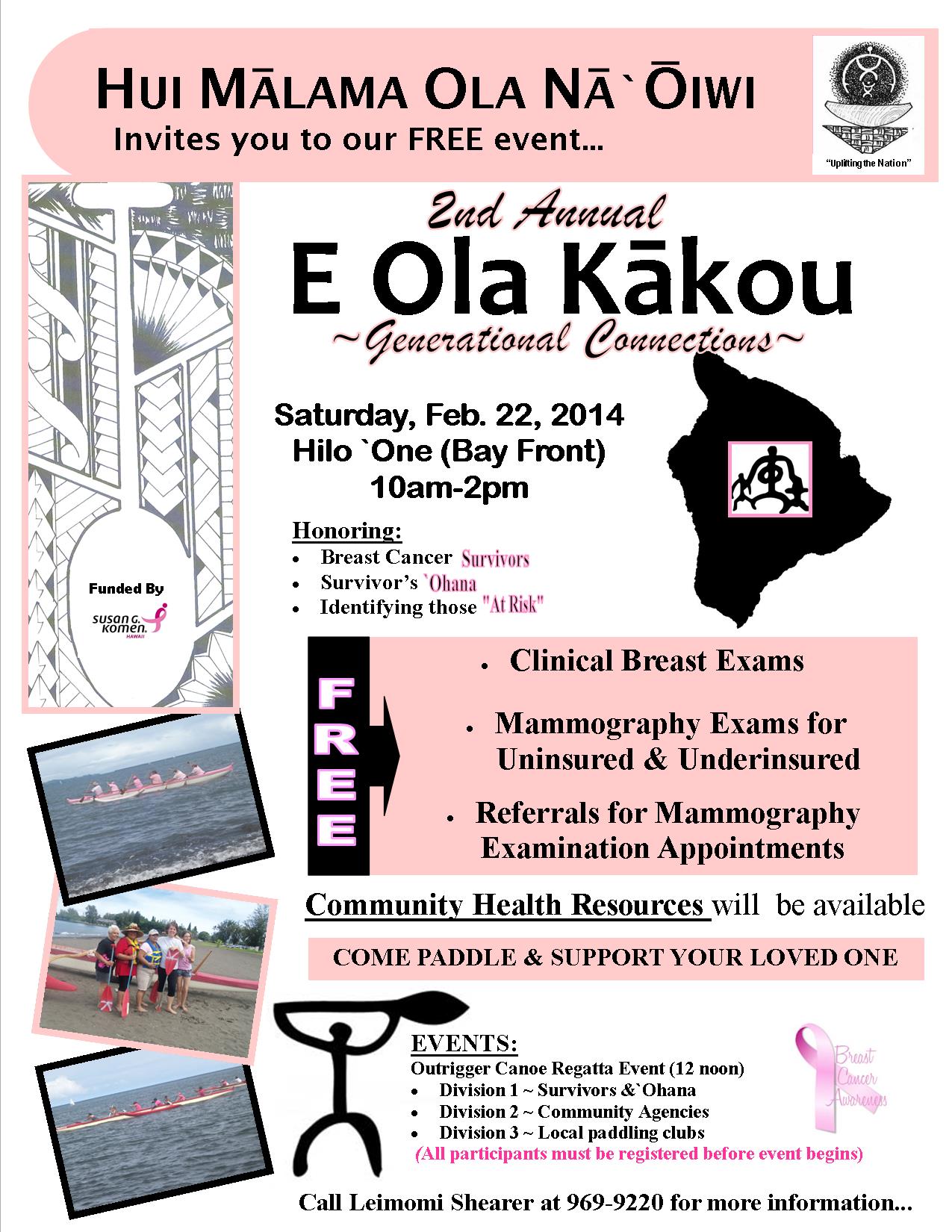
Hui Mālama Ola Nā `Ōiwi invites you to our 2nd Annual E Ola Kākou: Generational Connections event funded by Susan G. Komen. This event is will be held on Saturday, February 22, 2014 from 10am-2pm in Hilo at Bay Front to honor Cancer Survivors, Survivors `Ohana & for those who may be at risk for Cancer. I have attached a flyer which gives more detailed information. There will be FREE Clinical Breast Exams & Mammography referrals/services on location along with some valuable community health resources information.
What a time to get in the water to participate in the canoe races! Put a team together with your co-workers and enter a friendly competition in support of our Cancer Survivors, Survivors `Ohana & for those who may be at risk for Cancer.
PLEASE pass on this flyer & email throughout your agency and to your ohana & friends.
We hope to see you there to have fun on this special day!
If you have any questions, please contact Leimomi Shearer at 969-9220 or leimomi@huimalamahawaii.com.
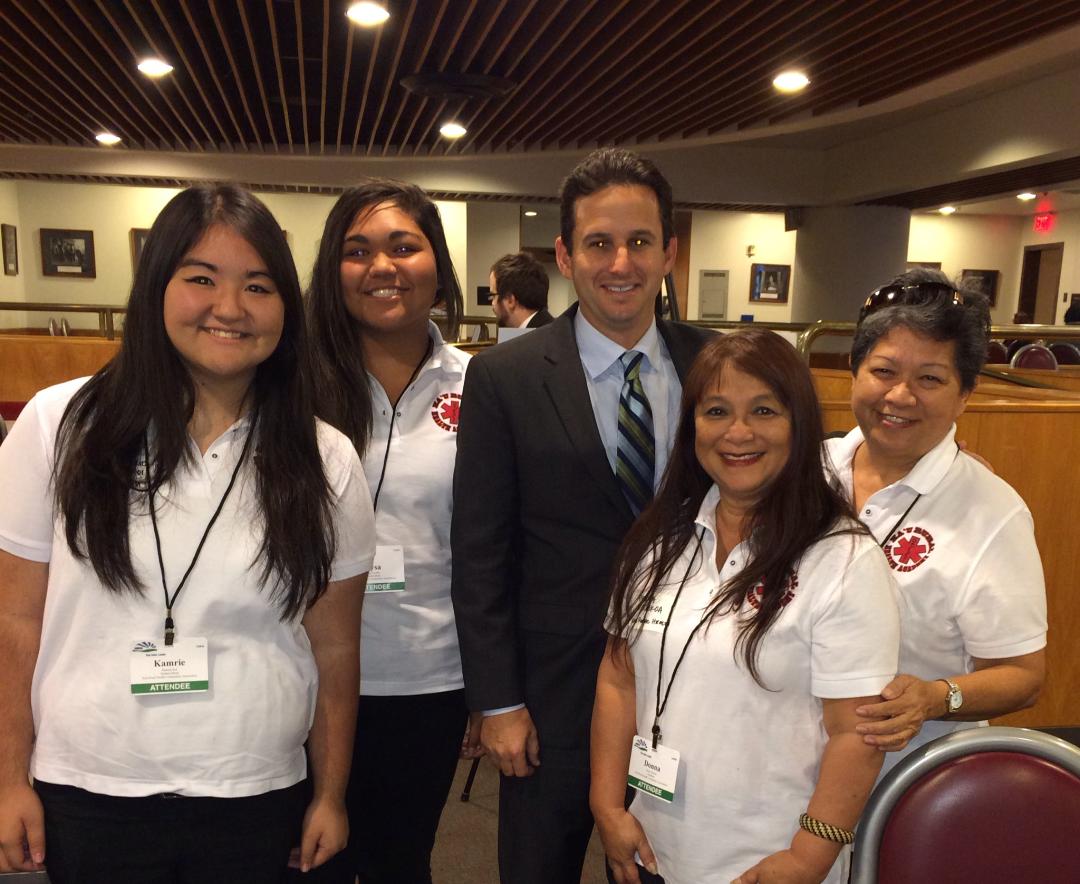
KRHCAI Student Interns, Exec Director and Board President meet with Congressional Leaders
KRHCAI Academy interns, Kamrie Koi and Nysa Kaniho, along with Executive Director, Jessie Marques and Board President, Donna Kekoa spend valuable talk story time with Senator Brian Schatz and Representative Colleen Hanabusa. The KRHCAI team is in Washington for the 25th Annual Rural Health Policy Institute.
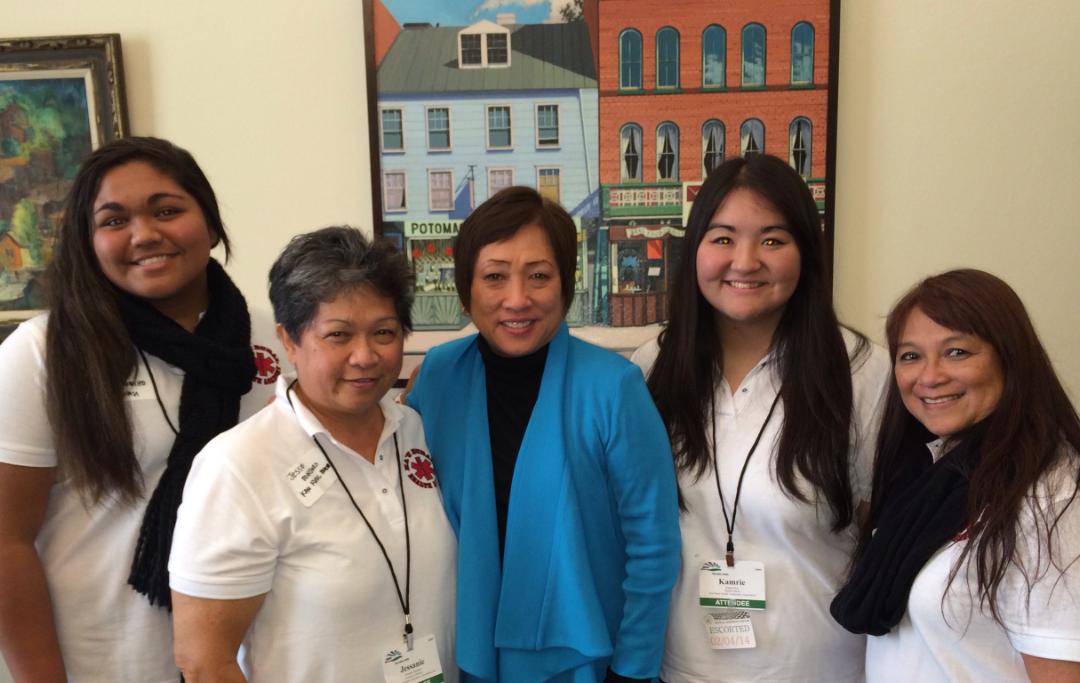
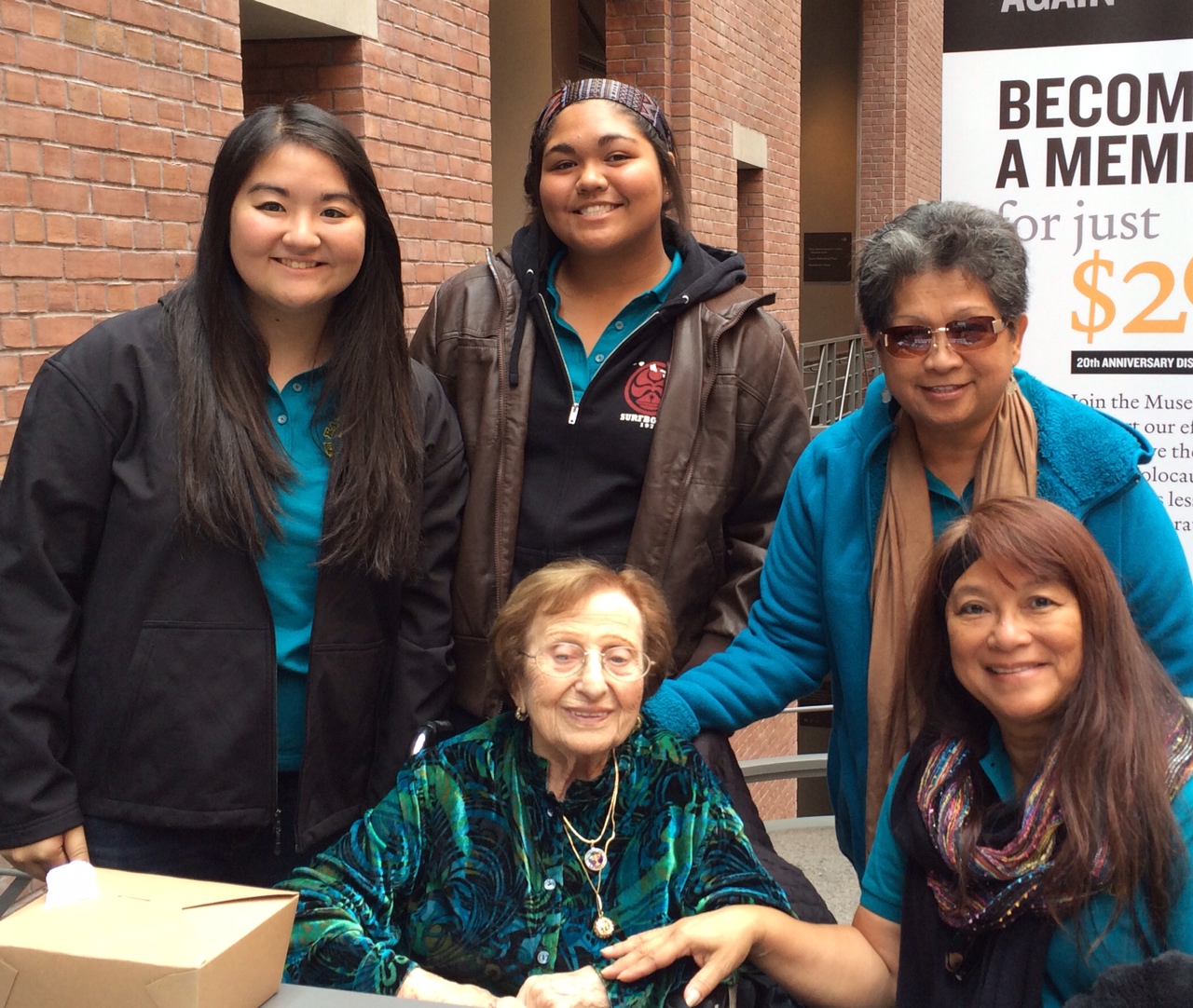
KRHCAI Student Interns and Chaperones visit Holocaust Museum
Pictured above: Student Interns Kamrie Koi and Nysa Kaniho pause to take a picture with 97 year old Auwsticz survivor, Fanny Aizenberg. Chaperones Jessie Marques and Donna Kekoa also stand with interns. Pictured below: Jessie Marques and Donna Kekoa stand outside the Holocaust Musuem.
Students and chaperones will take in the 25th Annual National Rural Health Policy Institute in Washington D.C. Feb 4-6.

Pacific Islander students can receive services through UHH PISC (Pacific Islander Student Center)
The Center offers a broad spectrum of services and programs including lectures, panel discussions, workshops, films and videos, and musical, dance, and dramatic performances. All UH Hilo students are welcome at the Center. We think you’ll discover a “home away from home” right here in the middle of the UH Hilo campus. Stop by any time. You’re welcome here and we’d love to see you!
A Gathering Place
The Center is set up to be a gathering place for Pacific island students to meet each other, to study individually or in groups, or hold their meetings and events. Students can use our 10 Apple and PC desktop computers and sign out any of our 20 laptops for their use. To help students relax in between classes, we have a large flatscreen television which can play CNN news, ESPN, and other major network news channels. The Center also has a growing collection of books and DVDs on Pacific-related topics, includes a kitchen (including refrigerator, stove and microwave), a lanai with covered tables for group meetings or to eat your lunch. Please contact pisc@hawaii.edu if you wish to schedule a meeting or event at the PISC.
Student Development & Support
Bridge Program
Fifteen students who have been accepted to UHH will be selected to participate in an intensive 7-day residential bridge program on campus prior to the start of the fall orientation week each year. The program is designed to introduce first-year students to college-level expectations for writing, mathematics, critical inquiry, study skills/strategies, different learning and teaching styles, and campus resources, as well as to encourage help seeking behaviors which many minority students lack. Find out more>>
Learning Communities
The Center will arrange small learning communities in which students from similar cultural backgrounds who are enrolled in the same programs and/or courses will study together in small groups at the Pacific Islander Student Center and support each other’s success. Learning communities in particular will be constructed in ways that capitalize on Pacific Island identity and values. Pacific Islanders tend to identify with a unit larger than individuals, such as with families, clans, villages, and islands. Pacific Island cultures value group cohesion and harmony more strongly than individual success; a positive group reputation is strongly valued, and competition between groups often serves as an effective motivator. In light of that, great potential exists in developing and implementing approaches that aim to facilitate the success of students by motivating and rewarding them as groups, rather than as individuals. Thus, the project will construct learning communities that motivate and reward groups, enhance group reputation, and promote healthy competition between groups as a culturally informed service.
Peer Mentoring
The Center has partnered with the Minority Access & Achievement Program to utilize its PALS peer mentoring program for interested first year Pacific Islander students. Students will meet regularly with an assigned peer mentor throughout the first year, who will provide guidance, advice, encouragement and support as they assist them in building solid academic foundations and developing habits and attitudes that lead to academic and
personal success.
HELP (Highly Engaged Learning Positions) Symposium set for May 3, 2014
Pacific Islander Student Center
National Suicide Prevention Lifeline
National Suicide Prevention Lifeline
Call 24/7
1-800-273-8255

Are you in crisis?
Follow us


Search
About us

The Lifeline is a network of 162 crisis centers in 50 states.

No matter what problems you are dealing with, we want to help you find a reason to keep living. By calling 1-800-273-TALK (8255) you’ll be connected to a skilled, trained counselor at a crisis center in your area, anytime 24/7.
Telemarketing Tactics by Mail-Order Suppliers of Home Diabetes-testing supplies
The Senior Medicare Patrol is…….. LOOKING OUT FOR YOU
PREVENT DETECT REPORT
DATE: 1/21/14 2014-1
SUBJECT: Telemarketing Tactics by Mail-Order Suppliers of Home Diabetes-Testing Supplies
If you have Original Medicare, and you have diabetes and get your diabetes testing supplies delivered to your home, take note of this important ALERT!
Medicare’s National Mail-Order Program for diabetes testing supplies began on July 1, 2013. You now need to use a supplier in this program in order to have Medicare pay for diabetes testing supplies that are delivered to your home.
Some suppliers use marketing companies to send out postcards to people with Medicare to get personal information for suppliers to make sales calls. If you reply to these postcards, you may not know how the information you give on the postcard will be used.
You may receive sales calls that pressure you to switch vendors or confuse you by telling you that you have a new supplier. As bait, they may offer what they claim to be the latest blood glucose monitor FREE – to get you to give out your Medicare number and your doctor’s name.
Testing supplies may even be shipped to your home even though you did not enroll in the supplier’s mail-order program and your doctor did not send in a prescription.
1. Make sure your mail-order supplier is an approved supplier in Medicare’s National Mail-Order Program. Tell your doctor to write the name of your chosen supplier in your medical record.
2. If you receive a telemarketing call from someone who is not your mail-order supplier, don’t give out your Medicare number. Hang up.
3. If unordered items arrive at your home, refuse the delivery. Don’t open the box. Give it back to your mail carrier to return to the sender. If you opened the box, call the supplier and ask for a shipping label. If they tell you they will close your account but tell you to keep the supplies, return the supplies anyway so they can’t turn around and bill Medicare. Make sure to get a return receipt.
4. Notify Medicare at 1-800-633-4227. Check your Medicare Summary Notice to make sure Medicare does not pay for the supplies you returned. Call the Senior Medicare Patrol (SMP Hawaii) at 586-7281 or 1-800-296-9422 if you need help.
10th Annual Celebrate Your Family Event – April 5, 10:00 AM
|


 Kaʻū Rural Health Community Association, Inc.